What is nesting?
Short answer
Nesting is laying furniture parts out on a sheet with the least waste. The parts are arranged on the sheet taking the cutter width, the edge trim, the grain direction and the sheet size into account, so fewer sheets are used.
Why does it matter?
Sheet material is the biggest item in furniture cost. When parts are laid out one after another by hand, unusable strips are left at the end of the sheet. Nesting shrinks those gaps; the same job comes out of fewer sheets.
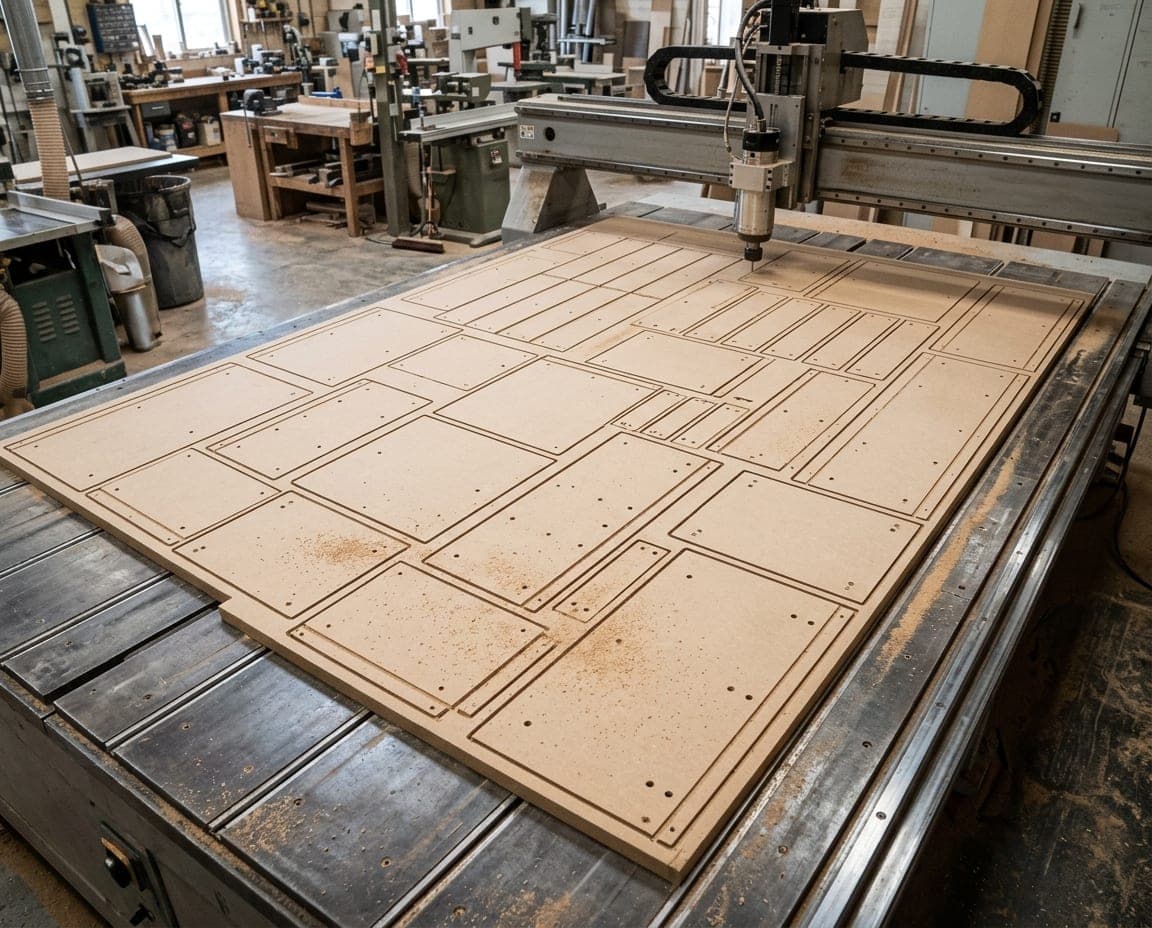
What does nesting take into account?
- Cutter width. A gap the width of the CNC cutter (router bit) is left between parts.
- Edge trim. The allowance trimmed off the sheet edge.
- Grain direction. Parts on patterned sheets are not rotated.
- Offcuts. Leftover offcuts are filled before a new sheet.
Related terms
Frequently asked questions
Completely waste-free cutting is not possible; nesting keeps waste to a minimum. What remains depends on the part sizes, the sheet size and the cutting settings.
No. The cut list gives the parts’ sizes and quantities; nesting plans how those parts are laid out on the sheet. In moducut both come from the same project.
Both. The 1-Year and Lifetime plans have every feature; the plans differ only in license length.